
Key Takeaways
- The best product information management (PIM) software in 2026 must support AI-driven commerce, syndication, and compliance readiness.
- Modern PIM platforms replace manual spreadsheets with centralized, automated workflows.
- PIM now plays a direct role in discoverability across marketplaces, LLMs, and social commerce.
What Is Best PIM Software?
The best PIM software is a centralized platform that collects, enriches, governs, and distributes product data across every sales and marketing channel. This includes websites, marketplaces, ERPs, mobile apps, retail partners, and now even AI assistants.
Unlike basic catalog tools, modern PIM platforms manage:
- Product attributes
- Pricing
- Digital assets
- Regulatory data
- Formatting
In 2026, the best PIMs also support automation, AI enrichment, and syndication.
Use Cases
PIM platforms power many business functions, including:
- Launching products faster across global channels
- Reducing errors in product listings
- Supporting B2B and DTC commerce together
- Scaling marketplaces without staff increases
- Preparing for new compliance standards (i.e. Digital Product Passport)
Why the Best PIM Software Matters in 2026
Challenge #1: Exploding Product Complexity
Customers now expect:
- Rich media
- Personalized product details
- Formatting specific to each channel
- Local language support
- Fast updates
Managing this manually creates bottlenecks.
Solution via Modern PIM Platforms
The best PIM software removes these bottlenecks by:
- Centralizing data in one system
- Automating formatting
- Syndication capability
- Enforcing validation rules
- Tracking update histories
This reduces errors while improving speed and control.
How to Choose the Best PIM Software for Your Business
When evaluating the best PIM software, buyers should look beyond feature checklists and focus on long-term usability and ROI. Here are the most important factors to consider:
1. Data Modeling Flexibility
The best PIM software should support complex hierarchies, variants, bundles, and category-specific attributes—without custom development.
2. Automation and AI Capabilities
Modern PIM platforms increasingly use AI to:
- Generate product descriptions
- Extract attributes from supplier data
- Normalize product information
- Enrich content at scale
These capabilities dramatically reduce time-to-market and content costs.
3. Integration Ecosystem
Your PIM should integrate seamlessly with:
- eCommerce platforms
- Marketplaces
- ERP and CRM systems
- Digital Asset Management (DAM) tools
Poor integrations are one of the most common reasons PIM projects fail.
4. User Experience and Adoption
The best PIM software is one your teams actually use. Look for intuitive interfaces, role-based permissions, and workflow automation that supports eCommerce, marketing, and operations teams alike.
5. Scalability and Performance
As catalogs grow, performance matters. Enterprise PIM platforms should handle high SKU volumes, global data governance, and content in multiple languages without slowing down.
Best Software for Product Information Management in 2026

Product information management in 2026 will dictate how brands compete across search, marketplaces, and consumer platforms. Without trusted, centralized product data, brands lose visibility and credibility.
As commerce shifts toward conversational shopping, smart recommendations, and automated checkouts, the best PIM software ensures the data behind those experiences stays accurate and compliant.
Best PIM Solutions to Consider in 2026
Below are 7 respected PIM platforms shaping the market in 2026:
1. Pimberly
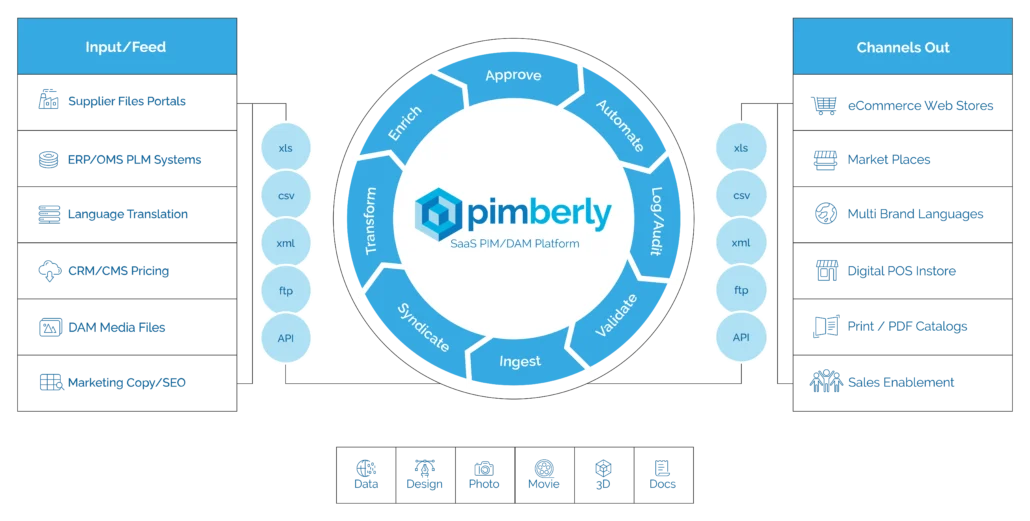
Best for enterprise brands seeking AI-powered PIM + DAM + automation in one platform.
Key advantages:
- Unified PIM & DAM
- AI enrichment tools
- Fast ERP integrations
- Strong governance workflows
- Composable build that scales with a brand
2. inRiver
An option for brands with complex product lifecycles and distributor networks.
- Validation in workflows
- Governance controls
- Multi-market product flows
3. Stibo Systems (STEP)
PIM with deep master data governance.
- Easy data orchestration
- Supplier onboarding tools
- Advanced compliance reporting
4. Informatica Product 360
Built for brands needing structured product governance.
- MDM + PIM unification
- Heavy governance workflows
- ERP-centric retailers
5. Pimcore
A PIM with strong developer flexibility.
- API-first approach
- Modular architecture
- Strong eCommerce integrations
6. Salsify
Focused on content syndication and digital shelf optimization.
- Retail feed management
- Channel-specific enrichment
- Strong marketplace publishing tools
7. Syndigo
Suited for large retail networks focused on product syndication.
- Retail content distribution
- Compliance data management
- Supplier onboarding features
Each of these platforms supports different business models. The best PIM software for your brand depends on scale, channels, industry, and technical stack.
How the Best PIM Software Drives Revenue Growth
Faster Time to Market
Teams launch products faster by eliminating:
- Spreadsheet handoffs
- Email approvals
- Manual formatting
Higher Conversion Rates
Clean, complete product data increases trust, which leads to higher:
- Cart fill rates
- Conversion rates
- Repeat purchases
PIM and AI-Driven Commerce in 2026
AI assistants, smart chatbots, and LLM-based shopping all depend on one thing: structured product data. The best PIM software feeds:
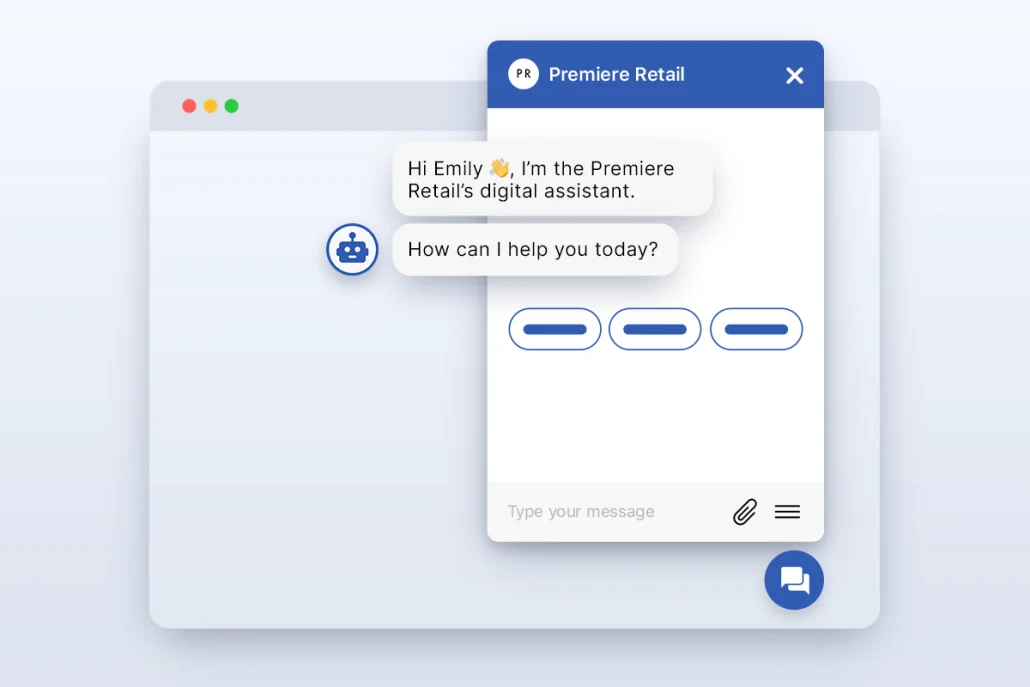
- AI commerce assistants
- Automated merchandising tools
- Dynamic pricing systems
- Personalization engines
Without centralized product data, AI shopping breaks down.
Regulatory Pressure Makes PIM Non-Optional
In 2026, brands face rising pressure to manage:
- Sustainability data
- Compliance
- Supplier origin details
- Material disclosures
The best PIM software supports:
- Data audits
- Supplier feeds
- Compliance workflows
- Product lifecycle tracking
This positions PIM as both a growth engine and a risk management tool.
PIM By Industry

To see how PIM functions best for each industry, we have these specific pages:
Manufacturers need simple governance and standardized supplier data to support distributors and downstream partners.
Distributors rely on PIM to centralize data from hundreds of suppliers, standardize attributes, and publish accurate content across catalogs and eCommerce sites.
Retailers and brands prioritize speed-to-market, rich product storytelling, and consistent omnichannel experiences, making DAM and AI enrichment essential.
FAQs
Q: What makes a PIM platform the “best” in 2026?
A: The best PIM software in 2026 combines AI enrichment, fast syndication, secure governance, and seamless integrations across eCommerce, ERP, and marketplaces.
Q: Is PIM only for eCommerce companies?
A: No. PIM supports manufacturers, distributors, retailers, healthcare systems, and service brands that manage structured product or asset data.
Q: How long does PIM implementation take?
A: Most modern cloud PIM systems deploy within 60–120 days depending on catalog size and integrations.
How to Choose the Best PIM Software in 2026
To summarize, the best PIM software in 2026 is no longer a behind-the-scenes data tool. It is a frontline growth platform that drives:
- Faster launches
- Better customer experiences
- Stronger AI readiness
- Better compliance
- Higher revenue
What this means for you is simple: brands that treat product data as a strategic asset will outgrow those who treat it as a task.
Next steps should include auditing your existing product data workflows, assessing integration gaps, and defining your roadmap for AI commerce. The right PIM platform becomes the backbone for everything that follows.

A super-quick run through of the key features of Pimberly’s key PIM, DAM and automation functionality.

"With Pimberly we are able to get rich data, right the first time."
JD Sports




